Germany's cabin-luggage market rewards specificity. Airlines publish exact limits, retail chains stock dozens of near-identical trolleys, and shoppers compare on millimetres, grams and wheel smoothness rather than colour. So treat Brand X — the archetypal direct-to-consumer hard-shell specialist — as a test case for the whole category.
🧳 What they do well
The strongest version of the Brand X archetype gets three things right. First, the shell material. A polypropylene hard shell flexes under impact and springs back, which is precisely what you want when a gate agent wedges your trolley into a full overhead bin. Polycarbonate is stiffer and often lighter, but it can crack at stress points after repeated drops at −10 °C on a winter tarmac.
Second, the wheel geometry. A four-wheel spinner base with 50–55 mm wheels and sealed ball bearings rolls almost silently on terminal flooring and lets you push the case sideways down a narrow aisle. Cheap unsealed wheel housings are the first thing to fail — usually as a grinding noise rather than a clean break — and the best brands sell replacement wheel sets for €15–€25.
Third, internal layout. A clamshell case with a zippered mesh divider on one side and a compression strap plus cross-straps on the other is a genuine packing-efficiency advantage over a single-compartment soft bag.
- ✅ Polypropylene or polycarbonate shell with visible flex under hand pressure
- ✅ Four 50–55 mm sealed-bearing spinner wheels, replaceable
- ✅ Integrated TSA-approved combination lock (relevant for US transit)
- ✅ Compression strap plus mesh divider inside
- ✅ Published external dimensions matching 55 × 40 × 20 cm
⚠️ Where they fall short
Two honest criticisms. The first is weight. A hard-shell cabin trolley built to survive abuse typically weighs 2.6–3.2 kg empty. That leaves you roughly 5–6 kg of usable payload under a 8–10 kg legacy-carrier cabin limit — and under 7 kg limits, packing becomes a maths exercise. Soft-shell cabin bags often win on pure grams.
The second is the shape penalty. The rigid frame and wheel housings eat into the outer envelope. A "55 × 40 × 20 cm" hard shell rarely delivers more usable litres than a soft bag of the same footprint, and it cannot be over-stuffed into a slightly-too-small sizer the way a soft bag can.
- ⚠️ Empty weight of 2.6–3.2 kg eats into strict 7–8 kg cabin allowances
- ⚠️ No give: hard shells fail a sizer test the moment the outer dimension is exceeded
- ⚠️ Cheaper shells use ABS, which is more brittle and prone to cracking at corners
- ⚠️ Unsealed wheel housings are a common failure point after 2–3 years
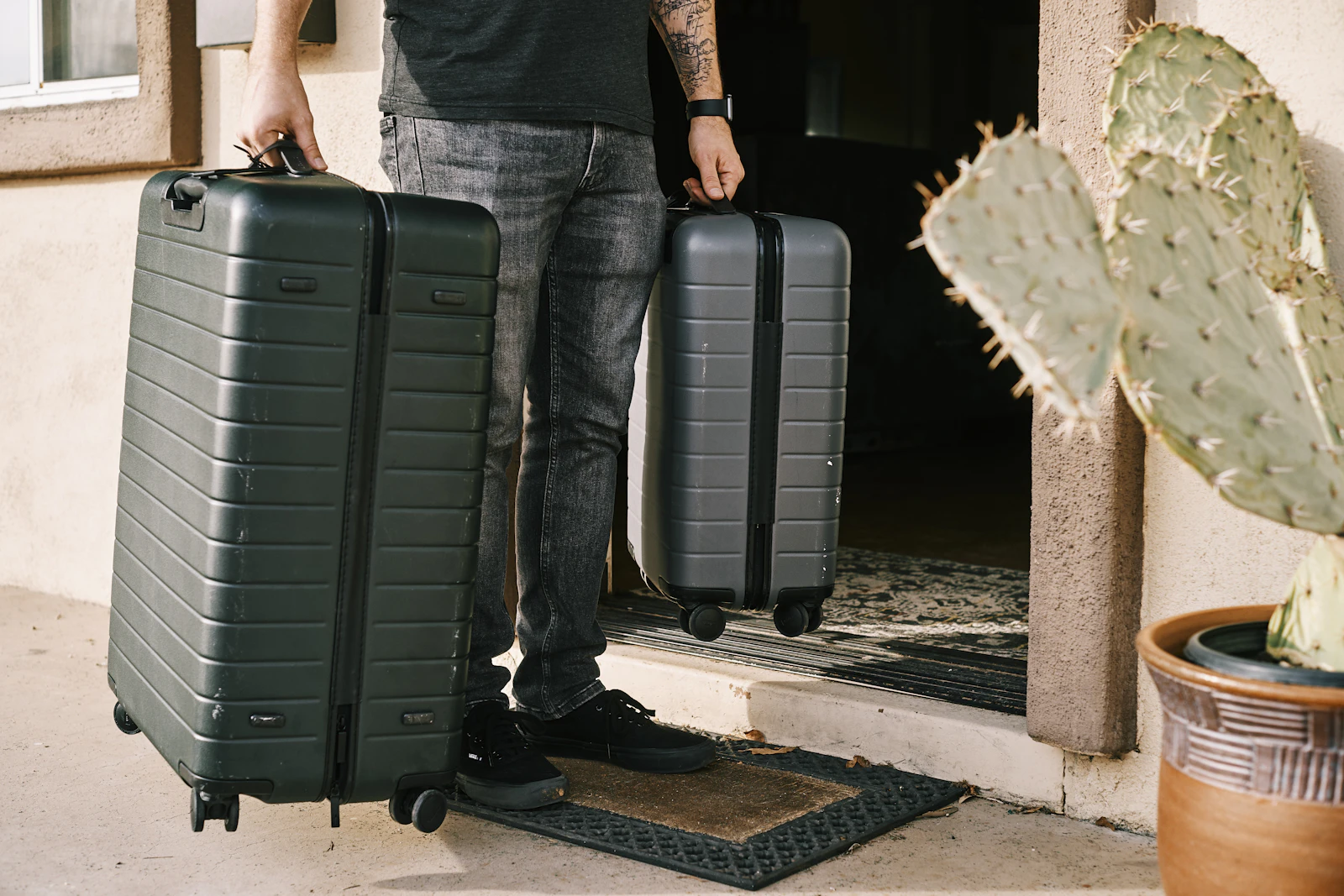
On hard-shell cabin luggage, you are not buying a shell — you are buying the wheels, the zips and the warranty behind them.
👤 Best-fit shopper
The Brand X archetype fits the frequent short-haul flyer who checks a bag rarely, values a scuff-resistant shell, and flies mostly on carriers with 55 × 40 × 23 cm cabin allowances — Lufthansa, Eurowings, KLM, Air France. It also suits anyone who has cracked or torn a soft bag and wants a case where damage is visible rather than hidden.
It fits poorly if you fly Ryanair or Wizz Air under-seat-only fares, where the free bag limit is roughly 40 × 20 × 25 cm, or if your trip is a weekend where every 100 g of empty weight costs you a clean shirt.
🔁 Alternatives worth comparing
The honest answer is that Brand X is one valid choice among several. This table compares the archetypes worth putting side by side before you buy.
| Alternative type | Best for | Trade-off |
|---|---|---|
| Polypropylene hard shell (Brand X archetype) | Frequent EU short-haul flyers wanting scuff-resistant durability | 2.6–3.2 kg empty weight; rigid shape fails sizers if overstuffed |
| Polycarbonate hard shell | Travellers prioritising lower weight and a stiffer shell | Higher price (€180–€320); can crack at low temperatures |
| ABS hard shell (budget) | Occasional travellers on a tight budget | More brittle; corner cracks are the most common failure mode |
| Soft-shell nylon cabin bag | Under-seat flyers and light packers | No crush protection; fabric absorbs stains and odours |
| Hybrid semi-rigid cabin case | Buyers wanting a bit of both | Compromises on both shell protection and packability |
| Underseat 40 × 20 × 25 cm hard case | Ryanair and Wizz Air free-fare flyers | Very small internal volume; frequently booked out in peak season |
Pro tip
Before buying any hard-shell cabin trolley, measure the internal depth of the main compartment with the divider fully zipped. The external 20 cm of a 55 × 40 × 20 cm case often comes down to about 14–15 cm of usable packing depth once you account for the shell, the divider and the wheel housings.
Watch out
Never trust a product page that lists only one dimension set. German carriers and the EU GPSR rules encourage transparent sizing, but third-party marketplace listings routinely round 55 × 40 × 21 cm up to the Lufthansa-legal 55 × 40 × 23 cm. If the difference matters at the gate, it matters at the point of sale.

❓ Frequently Asked Questions
📐 What size hard-shell cabin luggage fits Ryanair?
Ryanair's free cabin allowance is a single 40 × 20 × 25 cm bag that must fit under the seat, so a standard 55 × 40 × 20 cm trolley does not qualify. You would need either the smaller underseat format or a paid priority-boarding fare that allows the larger 55 × 40 × 20 cm cabin bag. Lufthansa and most EU legacy carriers allow 55 × 40 × 23 cm in the overhead bin.
🔬 Polycarbonate vs polypropylene hard-shell suitcase durability — which wins?
Polypropylene flexes and returns to shape, making it the more forgiving shell for impact abuse; polycarbonate is lighter and stiffer but can crack at low temperatures. For cold-weather European travel, polypropylene is usually the safer choice. For warm-climate travellers and weight-conscious flyers, polycarbonate's lower density can be worth the premium.
🧳 Is hard-shell cabin luggage better for packing efficiency?
Not automatically — a clamshell hard shell with a compression strap and mesh divider will beat a single-compartment soft bag, but a rigid shell has no give for overstuffing. Soft bags can be compressed into a slightly-too-small sizer; hard shells cannot. The packing-efficiency advantage of hard-shell luggage is real only when the internal layout is well designed.
💰 How much does hard-shell cabin luggage cost in Germany in 2026?
Budget ABS cases run €49–€89, mid-range polypropylene trolleys sit at €119–€199, and premium polycarbonate or aluminium cabin cases reach €220–€450. At the €139–€199 price point, you are typically buying a polypropylene shell, four spinner wheels with sealed bearings and a multi-year warranty — the sweet spot for most German shoppers.
🎒 Are four-wheel spinner hard-shell cases worth it in 2026?
Yes, if you value rolling comfort on terminal floors and the ability to push the case sideways down a narrow aisle; no, if you need every gram and centimetre of interior space. Two-wheel cases typically have slightly larger internal volume for the same external footprint, because the wheel housings intrude less into the packing area.
🏆 Should you buy?
If your trips are mostly 2–5 days on EU legacy carriers, and you have cracked or torn a soft bag in the past, the Brand X archetype — a polypropylene hard-shell 55 × 40 × 20 cm spinner with sealed-bearing wheels and a compression strap — is a rational buy at €139–€199. Verify three things before you pay: the empty weight, the internal packing depth with the divider zipped, and the cost and availability of a replacement wheel set.
If you fly mostly under-seat fares, pack to a strict 7 kg limit, or want maximum litres per centimetre, a soft-shell or hybrid cabin bag will serve you better. The hard-shell advantage is protection and scuff resistance, not volume — and any brand that pretends otherwise is selling you the shell rather than the journey.