
TL;DR
The best handwoven jute rugs for limited grip strength weigh around 2.5 to 3.5 pounds per square foot, use a thin cotton-latex backing instead of a stiff sprayed adhesive, and skip rolled factory edges that resist lying flat. Avoid anything advertised as "extra-thick" — thick equals heavy, and heavy equals two hands you may not have.
Handwoven jute rugs for limited grip strength fail most often at three points: total weight, backing stiffness, and edge height. A rug can be beautiful, fairly priced, and ethically made, and still be wrong if dragging it across a floor feels like hauling a sandbag. For shoppers managing arthritis, carpal tunnel, post-surgical recovery, or age-related grip loss, the physical handling matters more than the weave count.
This is not a sustainability lecture. It is a handling framework. Every recommendation below ties back to a measurable property — pounds per square foot, backing chemistry, edge profile — that a shopper can verify before the rug arrives at the door.
📐 The framework
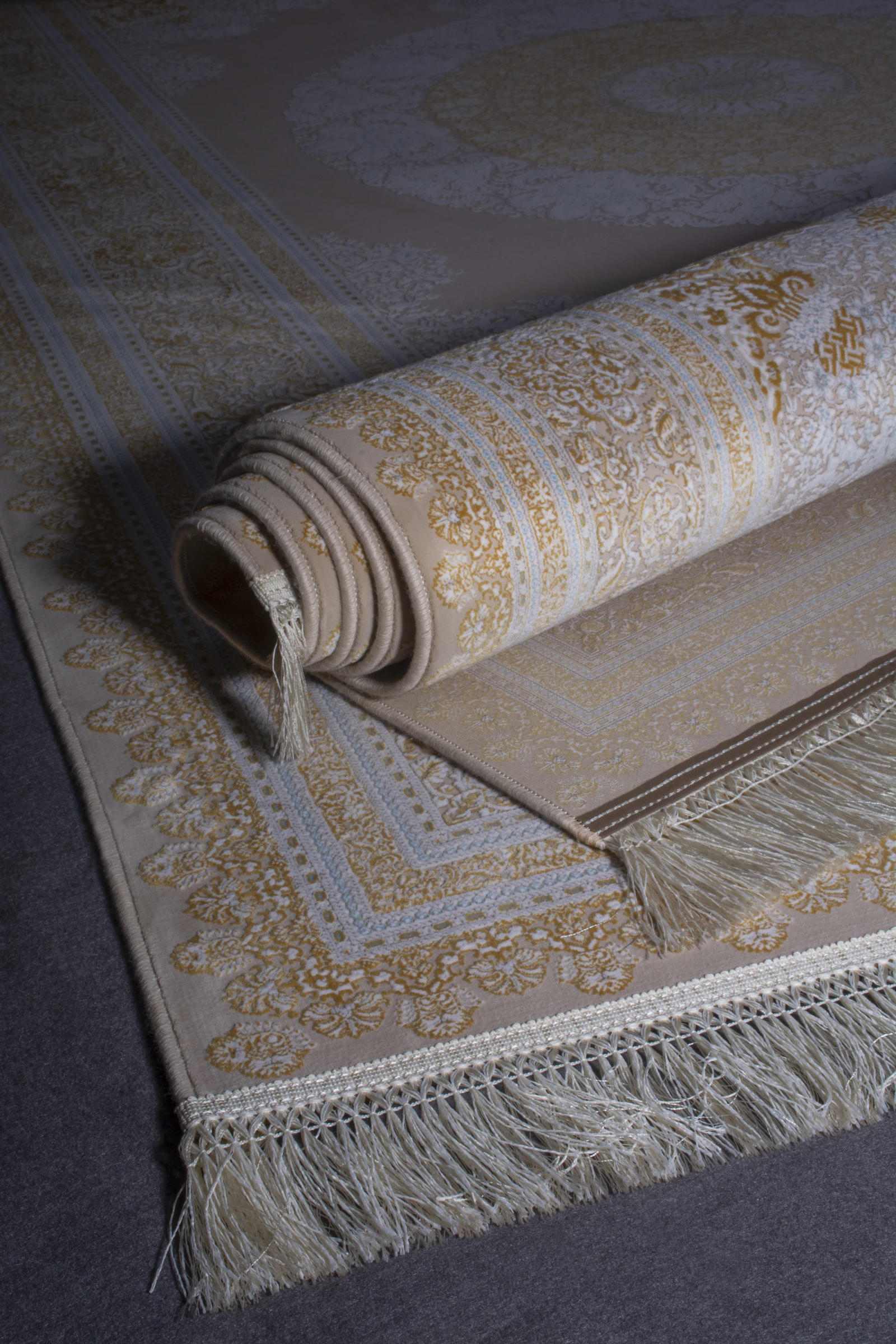
The framework has three steps, and they map directly to how your hands interact with a rug. First, weight: choose a size you can handle solo. A 5x8 is the practical ceiling for most grip-limited shoppers because it lands in the 45–75 pound range. An 8x10 jumps to 90–130 pounds and almost always requires two people. Second, backing: handwoven jute comes with three backing types — none (bare weave), cotton-latex, or sprayed SBR adhesive. Only cotton-latex gives you flexibility without slip. Third, edge: a rolled or serged edge over 0.5 inches forces a full-hand grip, which is exactly the motion that hurts when grip is compromised.
Run these as a sequence, not a checklist. Weight eliminates 60% of the market in under a minute. Backing eliminates another 25%. Edge profile decides between the finalists. If a rug fails step one, the backing and edge don't matter — you won't want to move it anyway.
Skip this framework and you end up with the most common regret: a beautiful 8x10 that never moves because moving it hurts. Shoppers with limited grip rarely have the luxury of a second purchase.
- ✅ Cap the weight. Target 3.5 lb/sq ft or less. A 5x8 at 3.0 lb/sq ft = 60 lb; an 8x10 at the same density = 120 lb. Buy the smaller size.
- ✅ Check the backing. Look for "cotton-latex" or "natural latex" on the spec sheet. Reject "sprayed", "anti-slip SBR", or anything unlabeled.
- ✅ Measure the edge. Ask the seller for pile + binding height. Under 0.4 inches is a pinch-grip rug; over 0.5 inches is a full-hand-grip rug.
- ✅ Pair with a thin pad. A 1/4-inch felt-and-rubber pad adds non-slip without lifting the edge above your grip threshold.
- ✅ Verify the unroll. A handwoven jute rug should relax flat within 48 hours without heavy books. If the seller mentions "allow two weeks to flatten," the weave is too tight.
If you can't drag it with one hand hooked into a corner, you can't live with it — no matter how it looks.
🔬 What to look for
The signal table below translates vague marketing copy into verifiable claims. Every entry is something you can ask a seller, find on a spec sheet, or measure when the rug arrives. Because jute absorbency is high, backing choice also affects how the rug reacts to spills — good to know if you're the one who wipes them up.
| Signal | What it means | How to verify |
|---|---|---|
| Weight per square foot listed | Predicts solo handling; under 3.5 lb/sq ft is the manageable band. | Ask seller for "lb/sq ft" or compute total weight ÷ rug area. |
| Cotton-latex backing | Flexible, slip-resistant, and doesn't stiffen with age. | Look for the phrase on the spec page or ask via chat. |
| Edge binding ≤ 0.4 in | Allows pinch-and-drag instead of full-hand lift. | Request a side-profile photo with a ruler. |
| GoodWeave certified | Independent monitoring of weaving facilities, no child labor. | Check the GoodWeave licensee lookup on the certification's own site. |
| OEKO-TEX Standard 100 label | Limits on harmful substances in the finished textile. | Verify the label number on the OEKO-TEX online label check. |
| Rolled, not folded, shipment | Folded rugs crease permanently at handwoven density. | Confirm with seller before purchase. |

Pro tip
Ask the seller to ship the rug rolled around a cardboard core rather than folded in a box. Rolled shipment keeps handwoven jute's shape and means the rug lies flat within a day — no heavy books, no wrestling.
⚠️ What to avoid
These red flags are specific to grip-limited shopping. Each one quietly converts a manageable rug into a two-person job.
- ⚠️ "Extra-thick" or "plush" jute. Thick jute runs 5–7 lb/sq ft — double the weight and double the edge height.
- ⚠️ Unlabeled backing. If the seller won't name the backing chemistry, assume sprayed SBR adhesive that stiffens over time.
- ⚠️ Rolled factory edges over 0.5 inches. These force a full-hand grip just to shift the rug six inches.
- ⚠️ Rugs shipped folded. Handwoven jute creases at fold lines and may never flatten without re-wetting.
- ⚠️ Sizes above 5x8 without a clear weight figure. An 8x10 that hides its weight is usually 100+ pounds.
- ⚠️ "Non-slip spray" add-ons. They create a tacky surface that fights drag movements and gets worse with dust.
🏅 Certifications that actually matter
Rug certifications vary wildly in what they actually verify. For handwoven jute, five carry real weight in 2026 because each audits a specific, checkable claim.
GoodWeave is the strongest labor-focused certification in the rug industry. It monitors weaving facilities, prohibits child labor, and rescues and educates at-risk children. It's the label to look for if you want assurance the rug was woven under verifiable working conditions.
OEKO-TEX Standard 100 restricts harmful substances in finished textiles, including dyes and finishes that can off-gas. For jute rugs, this matters because raw jute is often softened with oils or treated to reduce shedding before weaving.
Fair Trade Certified (Fair Trade USA or Fairtrade International) confirms a premium paid to producers and community development funds. The overlap with GoodWeave is common on well-run rug programs.
Global Organic Textile Standard (GOTS) applies only if the jute fiber itself is certified organic, which is rare — most jute is rain-fed and grown without certification. If a rug claims GOTS, ask for the certificate number.
Cradle to Cradle Certified (Bronze level or higher) evaluates material health, recyclability, and social fairness across the whole product. Few jute rugs carry it, so treat it as a genuine differentiator rather than a baseline.
Watch out
"Eco-friendly" and "natural" are unregulated marketing claims on US rug listings. Only GoodWeave, OEKO-TEX, Fair Trade, GOTS, and Cradle to Cradle have verifiable numbers you can look up. If a listing uses the words without the certificate, treat the claim as decorative.
❓ Frequently Asked Questions
How heavy is a 5x8 handwoven jute rug?
A 5x8 handwoven jute rug typically weighs 45 to 75 pounds, depending on pile density and backing. At 3.0 lb/sq ft — the manageable band for limited grip — a 5x8 lands near 60 pounds. Thicker weaves run 90+ pounds, which is why density matters more than size alone.
Are handwoven jute rugs hard to move?
They can be, but the difficulty scales with backing chemistry, not the weave itself. A cotton-latex back lets you drag the rug across a floor with a single hooked hand. Sprayed SBR adhesive stiffens with age and turns the same rug into a two-person lift by year two.
What's the best handwoven jute rug for seniors in 2026?
The best handwoven jute rug for seniors in 2026 sits under 3.5 lb/sq ft, stays under 0.4 inches at the edge, and carries a GoodWeave or OEKO-TEX label. A 5x8 low-pile weave with cotton-latex backing and a 1/4-inch pad hits all three criteria and stays movable for years.
Do jute rugs need a rug pad if grip strength is limited?
Yes — a thin 1/4-inch felt-and-rubber pad adds slip resistance without raising the edge profile. Thicker pads (1/2 inch and up) lift the edge above the pinch-grip threshold, which defeats the purpose. Choose the thinnest pad that still holds the rug in place.
How do I verify a jute rug's weight before buying?
Ask the seller directly for pounds per square foot, or divide the listed shipping weight by the rug's area in square feet. If the number isn't published, that silence usually means the rug is above the manageable band. Legitimate sellers of grip-friendly rugs list weight because it's their selling point.
🏆 Final word
Handwoven jute rugs for limited grip strength are not a niche product — they're simply rugs described honestly. Three numbers decide everything: pounds per square foot, backing chemistry, and edge height. Get those right and a jute rug becomes one of the easiest floor coverings to live with, even on difficult-hand days. Get them wrong and the same rug becomes furniture you never move. Ask for the numbers, verify the certifications, buy the size you can drag — not the size you can admire.