
TL;DR
The Columbia Sportswear Women's Packable Lightweight Puffer Jacket with Hood is the best eco-friendly women's jacket for sustainable warmth in 2026, thanks to its packability, recycled materials, and cruelty-free certification. Plus, it's perfect for travel, hiking, or everyday wear.
When it comes to eco-friendly women's jackets and base layers, we're looking for products that make a positive impact on the environment without compromising on warmth, comfort, or style. In 2026, consumers are more environmentally conscious than ever, and we're here to help you find the best options for sustainable warmth.
To create this list, we evaluated each product based on quality, value, user experience, and brand ethics. Below, you'll find the top eco-friendly women's jackets and base layers for sustainable warmth in 2026.
🧪 How we picked
To determine the best eco-friendly women's jackets and base layers, we considered the following criteria:
- Quality: We looked at the materials, construction, and durability of each product.
- Value: We considered the price, performance, and longevity of each jacket or base layer.
- User experience: We evaluated factors like comfort, fit, and packability.
- Brand ethics: We assessed each brand's commitment to sustainable and ethical practices.
At a glance
| Product | Best For | Score | Price | Top Certifications |
|---|---|---|---|---|
| Columbia Sportswear Women's Packable Lightweight Puffer Jacket with Hood | Travel, Hiking, Everyday | 87 | $$ | Cruelty-Free, Leaping Bunny |
| Baleaf Womens Puffer Jacket, Converts to Travel Pillow, Lightweight | Travel, Hiking | 84 | $ | Cruelty-Free, Leaping Bunny |
| Pact V-Neck Pocket Tee | Base Layer | 83 | $$ | Fair Trade, USDA Organic, Non-GMO, Leaping Bunny, B Corp |
| Pact Organic Cotton Short Sleeve Crew Neck Tee | Base Layer | 82 | $$ | Fair Trade, USDA Organic, Non-GMO, Leaping Bunny, B Corp |
| Tentree Everyday Tee - Organic Cotton | Base Layer | 89 | $$$ | B Corp, USDA Organic, Fair Trade, Non-GMO, FSC Certified |
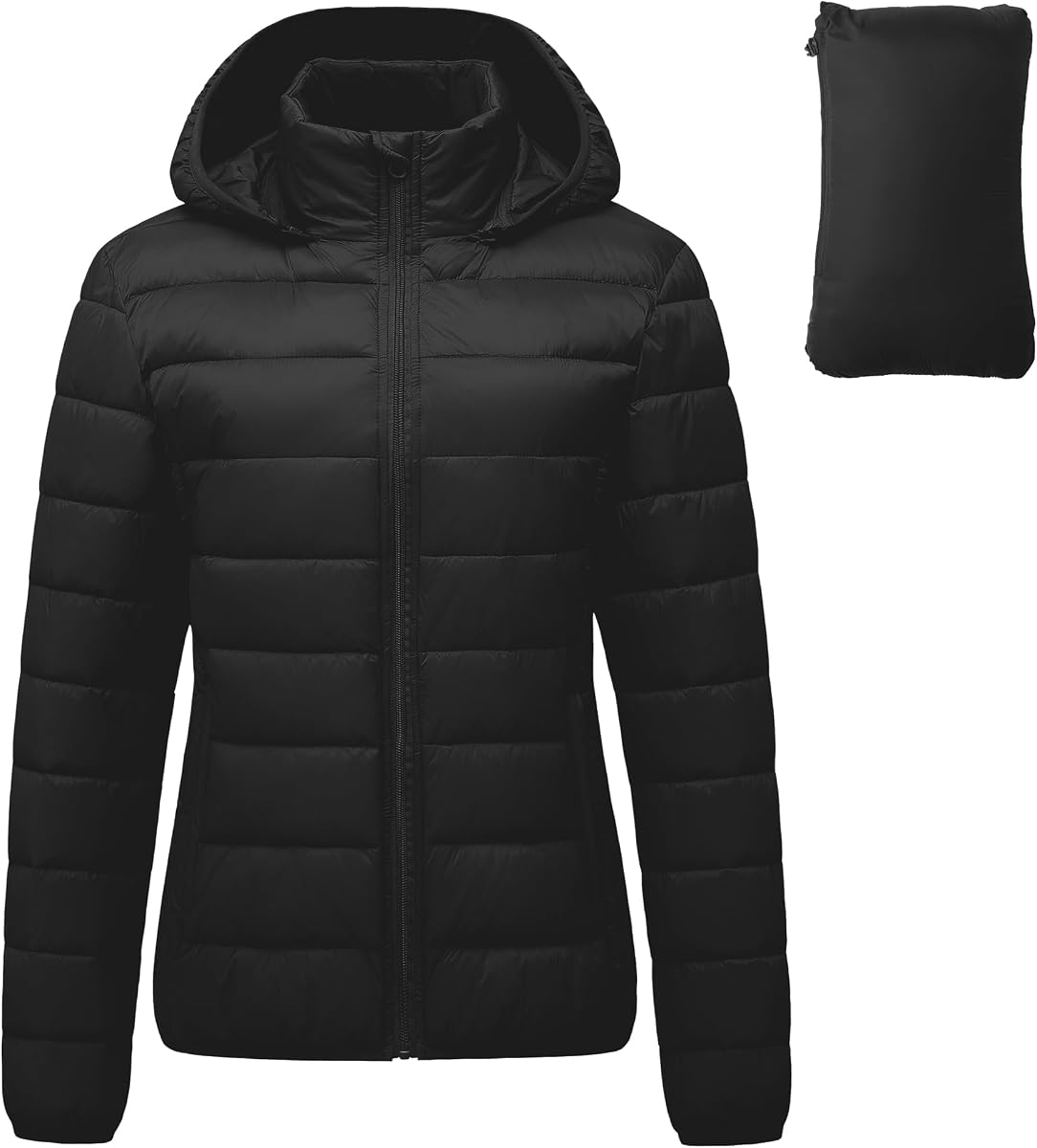
Columbia Sportswear Women's Packable Lightweight Puffer Jacket with Hood
The Columbia Sportswear Women's Packable Lightweight Puffer Jacket with Hood is our top pick for eco-friendly women's jackets in 2026. Its recycl...
How to choose eco-friendly jackets and base layers
Selecting the right eco-friendly winter clothing requires balancing performance needs with environmental responsibility. A great sustainable jacket or base layer should not only reduce ecological impact through recycled fibers or organic agricultural standards, but it must also perform reliably in real-world conditions like wind, moisture, and low temperatures. When evaluating products for your cold-weather wardrobe, consider these essential selection criteria.
Material provenance and fabric type: Look closely at the textile makeup. For base layers, certified organic cotton, recycled synthetics, or responsibly sourced natural fibers provide skin-friendly comfort. For outerwear and puffer jackets, recycled polyester or nylon shells paired with cruelty-free synthetic or recycled fills keep waste out of landfills while resisting precipitation and blocking chilly wind.
Thermoregulation and moisture control: Effective warmth depends on how well a garment manages humidity and body heat. A base layer sits directly against your skin, meaning its primary job is moving perspiration away before it cools and causes chills. Outer jackets, on the other hand, focus on trapping warm air close to the core while allowing excess heat to vent during active movement.
Versatility and packability: Multi-functional clothing minimizes the total number of items you need to purchase, inherently supporting a lower-consumption lifestyle. Compressible puffers that fold into pocket pouches or convert into compact accessories are ideal for hikers, travelers, and daily commuters who face shifting microclimates throughout the day.
Verified third-party certifications: Greenwashing remains common in the apparel industry. Seek out garments with trusted verifications such as Fair Trade, B Corp, Leaping Bunny, USDA Organic, or FSC certifications. These labels confirm that social welfare, chemical safety, or animal rights standards were audited by independent organizations rather than claimed arbitrarily by marketing teams.
Key selection factors compared
Different layers perform distinct functions within a cold-weather layering system. Here is how key decision factors differ between base layers and outer jackets:
| Selection Factor | Base Layer Priority | Outer Jacket Priority | Key Considerations |
|---|---|---|---|
| Material Type | High (Skin Contact) | High (Weather Shield) | Select organic fibers or recycled knits for base layers; look for durable recycled ripstop nylon or polyester shells for jackets. |
| Moisture Management | Critical | Moderate | Base layers must wick sweat efficiently to prevent rapid cooling; jackets need sufficient breathability to vent internal vapor. |
| Thermal Insulation | Low to Moderate | High to Critical | Base layers provide foundational warmth; puffer jackets trap dead air using cruelty-free or recycled high-loft insulation fills. |
| Packability & Weight | Moderate | High | Outerwear should compress efficiently for transit in backpacks or carry-on luggage without losing insulation loft when unpacked. |
| Durability & Care | High (Frequent Laundering) | Moderate (Spot Cleaning) | Undergarments undergo regular machine washing; jackets should feature robust outer fabrics that resist tears and scuffs from trail use. |
Common mistakes when buying sustainable outerwear
Shoppers often encounter pitfalls when attempting to build an eco-friendly cold-weather kit. Avoid these common missteps to ensure your gear lasts for seasons:
- Focusing solely on recycled content while ignoring build quality: A jacket made of recycled polyester that falls apart after one season generates more waste than a well-constructed garment that lasts for a decade. Prioritize reinforced seams, quality zippers, and durable stitching.
- Assuming all natural fabrics perform well in cold, wet conditions: While organic cotton tees provide soft comfort for casual outings and mild layering, untreated cotton absorbs water and loses insulation value when damp. Keep active pursuits focused on materials that maintain loft or dry rapidly.
- Overlooking packability for travel and outdoor recreation: Heavy, rigid outerwear often gets left in the closet. Compact, lightweight designs make it easier to bring warmth along wherever conditions are unpredictable.
- Neglecting certified animal welfare standards: If you prefer animal-free or cruelty-free gear, check for verified cruelty-free certifications rather than relying on vague product descriptions.
- Buying pieces that cannot be layered together: A tight puffer jacket will not accommodate base and mid-layers beneath it, while an oversized base layer creates bulk and friction that reduces thermal efficiency.
Practical tips for getting the most from your eco-friendly layers
To stay warm efficiently while extending the operational life of your sustainable clothing, apply these practical layering and maintenance habits:
- Adopt the three-layer principle: Pair a breathable base layer next to the skin, an optional insulating mid-layer for extreme cold, and a wind-resistant, insulated jacket on the outside. This allows you to regulate body temperature by removing or adding pieces as your activity level shifts.
- Wash your garments less frequently and use cold water: Laundering outdoor outerwear after every trip accelerates fabric degradation and consumes excess energy. Spot clean jacket shells with a damp cloth, and wash base layers in cold water on gentle cycles to preserve organic fibers.
- Store puffy outerwear uncompressed at home: While packable jackets are designed to squeeze into small spaces during transit, storing them tightly packed for months will eventually crush the insulation fibers and diminish their loft-trapping warmth. Hang them freely in a closet between adventures.
- Repair small tears promptly: A small puncture in a lightweight puffer jacket shell can quickly leak insulation. Use fabric repair patches rather than replacing the garment prematurely.
Frequently asked questions
What third-party certifications should I look for in eco-friendly clothing?
Independent certifications offer reliable proof of environmental and ethical standards. Key certifications to prioritize include Fair Trade for equitable labor practices, B Corp certification for overall social and environmental corporate governance, USDA Organic and Non-GMO for agricultural crops grown without synthetic pesticides, and Leaping Bunny or cruelty-free certifications to ensure animal welfare. FSC certification confirms that wood-derived cellulose fibers originate from responsibly managed forests.
How do eco-friendly puffer jackets provide warmth without down?
Modern cruelty-free and eco-friendly puffer jackets use engineered synthetic filaments, often derived from post-consumer recycled plastics. These high-loft synthetic clusters emulate the microscopic structure of natural plumage, effectively trapping pockets of warm air generated by your body. Unlike untreated down, many synthetic fills retain some insulating ability even in damp conditions, making them versatile for unpredictable weather.
When should I choose an organic cotton base layer?
Organic cotton tees make outstanding everyday base layers for travel, urban commuting, casual wear, and low-output outdoor activities in moderate temperatures. Certified organic cotton eliminates harsh synthetic pesticides and provides natural breathability against sensitive skin. However, for strenuous winter activities where intense sweating is expected, consider pairing cotton layers with active moisture-management outer layers to maintain personal comfort.
How do packable puffer jackets convert into accessories like travel pillows?
Many lightweight, travel-friendly puffer jackets feature integrated interior pockets, reversible storage pouches, or dedicated zippered collars. By turning the pocket inside out and gently folding the jacket into the pouch, the compressed fill creates a supportive cushion. This dual functionality saves luggage space, reduces the need to purchase separate travel pillows, and keeps your insulating layer accessible when transit temperatures drop.
Put this guide into practice
Use the article to identify requirements and trade-offs, then confirm the exact product and current terms with the seller. Publication or translation dates do not establish that every price, specification or certification has been rechecked.
- Quality30%
- Value25%
- User Experience25%
- Brand & Trust20%
Default weights; some categories adjust them where a factor matters more.
Purchase checklist
| Check | What to confirm |
|---|---|
| Exact model | Match the variant, dimensions, materials and compatibility to your needs. Similar names can refer to different versions. |
| Total cost | Confirm the current price, shipping, tax, accessories and recurring costs with the retailer. Recorded prices are not live offers. |
| Evidence | Read the linked source for the specific claim. Manufacturer descriptions, editorial assessments and customer reviews are different types of evidence. |
| Aftercare | Check warranty exclusions, return conditions and replacement parts before purchasing. |