TL;DR
The best bathroom dehumidifier for most French homes is a compressor model extracting 10–12 litres per day with a 2-litre tank and an adjustable hygrostat set to 50–55% RH. For small bathrooms under 6 m² or unheated spaces, a Peltier desiccant unit at 500 ml–1 L/day is quieter and cheaper to run. Always prioritise a hygrostat, auto-shutoff, and IPX4 splash rating.
Every morning, the average four-person French household releases between 10 and 15 litres of water vapour into the air through showers, cooking, and breathing. In a poorly ventilated bathroom, that moisture has nowhere to go. It condenses on cold surfaces — tiles, mirrors, window panes — and within 48 to 72 hours, mold spores can begin colonising silicone joints and grout. The result is that unmistakable musty smell, black speckling along the caulk, and a slow deterioration of paint and plaster that costs hundreds of euros to remedy.
The best bathroom dehumidifier stops this cycle at the source. But walk into any French electronics retailer — Boulanger, Darty, Fnac — or scroll through Amazon.fr, and you'll face a wall of specifications: extraction rates in litres per day, Peltier versus compressor technology, tank capacities, hygrostat thresholds, and price tags from €40 to €400. This guide cuts through the noise. It gives you a five-step framework for matching a dehumidifier to your actual bathroom dimensions and usage patterns, explains which certifications and safety standards actually matter, and flags the common mistakes that leave buyers with a unit that either underperforms or costs a fortune in electricity.
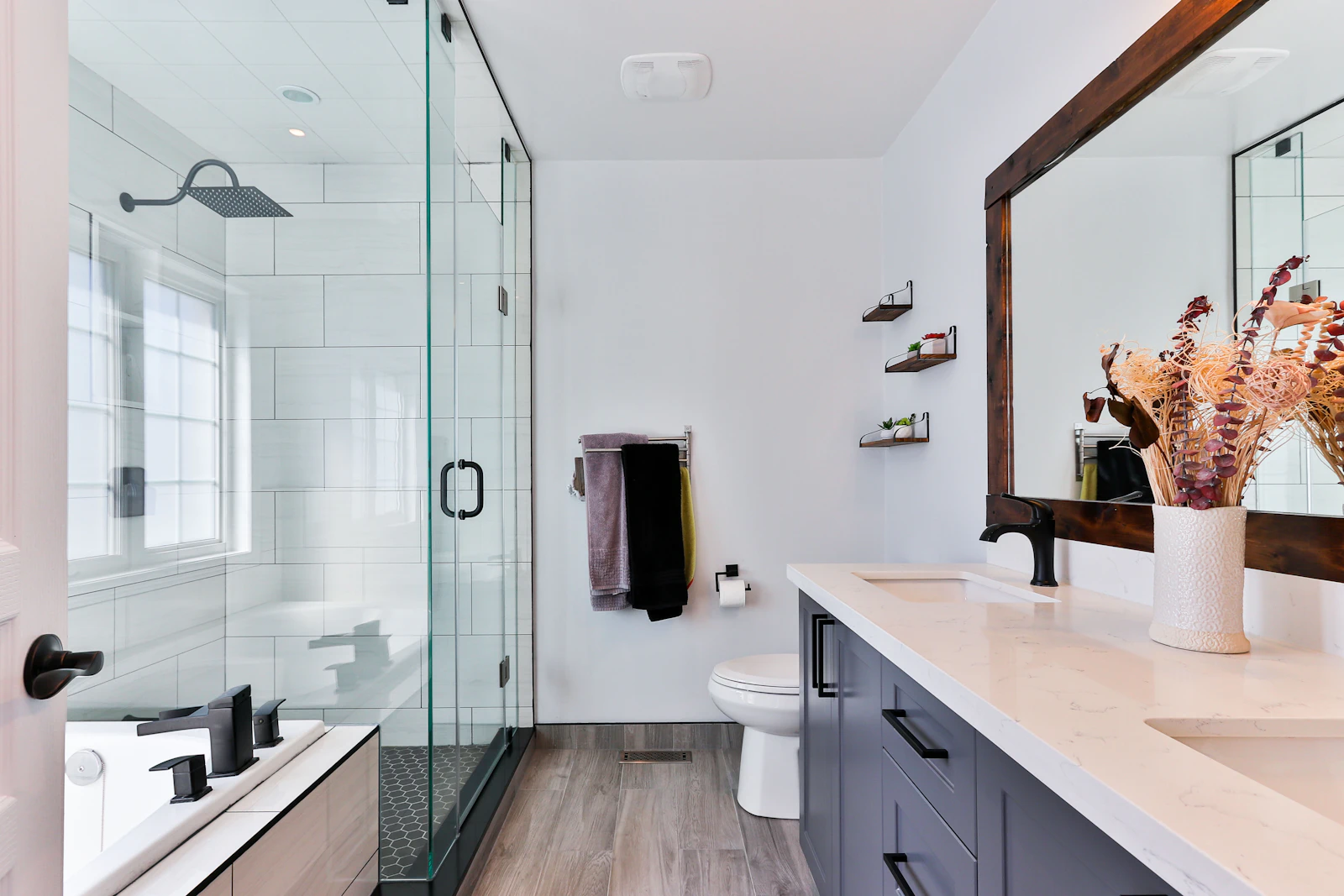
🔬 The framework: choosing a bathroom dehumidifier in five steps
The French market for meilleur déshumidificateur salle de bain has exploded since 2022, with dozens of brands competing on tank size and noise claims. Yet the physics of moisture removal haven't changed. A dehumidifier works by drawing air across a cold coil (compressor models) or a desiccant wheel (Peltier models), causing water vapour to condense and drip into a collection tank. What differs is how efficiently that process runs at different temperatures — and that's the variable most French buyers overlook.
Start by measuring your bathroom. A typical French salle de bain measures 5 to 9 m². The rule of thumb used by consumer-testing organizations like Que Choisir and 60 Millions de Consommateurs is that a compressor unit rated at 10 L/day handles a 15–20 m² room in temperate conditions. If your bathroom is only 5 m² but poorly ventilated and used by four people each morning, you need the same 10 L/day capacity because the moisture load — not the floor area — is the limiting factor. This is the single most common sizing error.
Next, establish your temperature range. Compressor dehumidifiers lose efficiency below 15°C and can freeze up entirely below 10°C. If your bathroom is unheated in winter — common in older French apartments — a desiccant/Peltier model rated at 500 ml–1 L/day is the correct choice despite its lower extraction rate. It will actually remove more water in a cold room than a 12 L/day compressor unit that's cycling on and off to defrost.
Finally, decide on automation. A hygrostat (hygromètre intégré) lets you set a target relative humidity — 50–55% is ideal for mold prevention — and the unit shuts off automatically once that threshold is reached. Without one, you're either running the machine continuously (wasting electricity) or manually guessing when to switch it off. Every unit in our comparison criteria table below includes a hygrostat as a non-negotiable feature.
- 💧 Measure the room in m² and count daily users — the moisture load matters more than floor area.
- 🌡️ Determine the minimum winter temperature — below 15°C, choose desiccant/Peltier technology.
- 🔬 Match extraction rate: 10–12 L/day for bathrooms over 6 m² with regular shower use; 500 ml–1 L/day for small or unheated rooms.
- ⚙️ Require a hygrostat with 50–55% RH setpoint and auto-shutoff.
- 🔌 Verify IPX4 splash rating and EU energy label before buying.
The moisture load in a bathroom — not its floor area — determines the extraction rate you need; a 5 m² room used by four people demands the same capacity as a 20 m² room used by one.
🌿 What to look for: comparison criteria that actually matter
French retailers list dozens of specifications, but only six directly affect whether a dehumidifier will solve your mold problem. The table below ranks them by impact on performance and running cost.
| Signal | What it means | How to verify |
|---|---|---|
| Extraction rate (L/day) | Litres of water removed in 24 hours at 30°C / 80% RH — the standard test condition | Check the EU energy label or manufacturer's technical sheet; real-world output at 20°C is typically 40–60% of the rated figure |
| Hygrostat range and accuracy | Allows you to set a target RH and auto-stop, preventing over-drying and cutting energy use | Look for an adjustable setpoint between 40% and 70% RH with ±5% accuracy; verify in the user manual |
| Tank capacity and continuous drain | Determines how often you empty the unit; a 2 L tank fills in 4–5 hours at full extraction | Prefer models with a 2 L+ tank and a hose connection for continuous drainage into a sink or floor drain |
| Operating temperature range | Compressor units lose capacity below 15°C; desiccant units work to 5°C | Check the manual's stated operating range; if your bathroom drops below 15°C in winter, choose desiccant |
| Noise level (dB) | Bathroom dehumidifiers run during or right after showers, so noise matters more than in a basement | Look for ≤45 dB(A); Peltier models typically run at 35–40 dB, compressors at 40–50 dB |
| IP rating and EU energy label | IPX4 confirms splash resistance for bathroom use; the energy label shows kWh/1000h | Verify CE marking and IPX4 on the rating plate; compare kWh/1000h figures across models |
💡 Pro tip
Set your hygrostat to 55% RH rather than 40%. Over-drying a bathroom below 45% RH wastes electricity and can cause silicone joints and wooden door frames to shrink and crack. The target is mold prevention, not desert conditions.
⚠️ What to avoid: red flags and common mistakes
Consumer-protection bodies across the EU have logged a rise in misleading dehumidifier claims, particularly on marketplace listings. Here are the red flags that should make you close the tab.
- ⚠️ Rated extraction at unrealistic conditions — a unit advertised as "20 L/day" but tested at 35°C / 90% RH will deliver perhaps 6–8 L/day in a 20°C French bathroom. Check the test conditions, not just the headline number.
- ⚠️ No hygrostat — a dehumidifier without an adjustable humidistat will run continuously, adding €40–€80 per year to your electricity bill compared to a hygrostat-controlled unit.
- ⚠️ Compressor unit for an unheated bathroom — below 15°C, compressor models ice up, cycle into defrost mode, and extract almost nothing. This is the single most common French buyer mistake.
- ⚠️ Tank under 1.5 L with no drain option — you'll be emptying it two or three times a day during winter, which most owners stop doing within a fortnight.
- ⚠️ No IP rating — a dehumidifier without IPX4 or better should never sit on a bathroom floor or counter near a shower or bath.
- ⚠️ Vague "anti-mold" claims without a hygrostat — preventing mold requires maintaining RH below 55%; a unit that cannot measure or control humidity cannot guarantee that outcome.
🏅 Certifications and standards that actually matter
Unlike food or cosmetics, dehumidifiers don't carry organic or ethical certifications. The relevant marks are technical and regulatory, and they directly affect safety and running cost.
CE marking confirms the product meets EU health, safety, and environmental protection requirements. It is mandatory for any dehumidifier sold in France, including on Amazon.fr. If a listing doesn't mention CE, treat it as non-compliant.
EU Energy Label rates the unit from A to G based on kWh per 1000 hours of operation. Since January 2026, the label also includes a noise emission class. A 300W compressor unit rated D will cost roughly twice as much to run as a 150W unit rated A, assuming similar extraction. Always compare the kWh/1000h figure, not just the letter.
IPX4 (or higher) indicates protection against water splashes from any direction. This is not mandatory for dehumidifiers, but it is essential for bathroom use. Without it, moisture ingress can short-circuit the unit or create a shock hazard near wet floors.
NF Environnement is a French eco-label awarded to products meeting stricter environmental criteria, including energy efficiency and recyclability. A small number of dehumidifiers carry it; where present, it signals independently verified performance.
⚠️ Watch out
Many Amazon.fr listings show a five-star rating based on fewer than 20 reviews, often posted within days of launch. Cross-reference with established French consumer-testing outlets such as Que Choisir or 60 Millions de Consommateurs before trusting marketplace ratings alone. A trend signal or a high star count does not prove a product works in your bathroom.
❓ Frequently Asked Questions
❓ How do I prevent mold in my bathroom?
Keep relative humidity below 55% by running a dehumidifier with a hygrostat set to that threshold for two to three hours after each shower. Combine this with mechanical ventilation (a VMC or an open window for 10 minutes) and wipe down wet surfaces. Mold requires sustained humidity above 60% RH to colonise, so controlling moisture is more effective than cleaning with bleach after the fact.
❓ What size dehumidifier do I need for a bathroom?
For a bathroom over 6 m² with regular shower use, choose a compressor unit rated at 10–12 litres per day; for smaller or unheated rooms, a 500 ml–1 L/day desiccant model is sufficient. Sizing should be based on moisture load — number of daily showers and ventilation quality — rather than floor area alone. A 5 m² bathroom used by four people needs the same capacity as a 15 m² room used by one.
❓ How much does it cost to run a dehumidifier per hour?
A 300W compressor dehumidifier costs approximately €0.07–€0.09 per hour at 2026 French electricity tariffs of around €0.25/kWh. Running it two hours daily adds roughly €4–€5 per month, or €25–€60 annually depending on use. Desiccant models typically draw 100–200W, roughly half the running cost, but extract less water per hour.
❓ Can I leave a dehumidifier running all night in the bathroom?
Yes, provided the unit has an auto-shutoff hygrostat and is rated for continuous operation. However, most bathroom dehumidifiers run at 40–50 dB, which can disturb sleep if the bathroom adjoins a bedroom. A better strategy is to run it for two to three hours after the evening shower with the door closed, then switch it off once RH drops below 55%.
❓ Do I need a dehumidifier if I already have a bathroom extractor fan?
An extractor fan removes moisture only while it runs and only if it's correctly sized; a dehumidifier provides targeted drying after showers when the fan has already been switched off. Many French apartments have undersized VMC systems or fans that vent into the loft rather than outside. In those cases, a dehumidifier is not redundant — it's the primary defense against mold.
🏆 Final word
The best bathroom dehumidifier for your home is the one that matches your bathroom's temperature range, moisture load, and daily usage — not the one with the highest extraction number on the box. Start with the five-step framework: measure the room, count the users, check the winter temperature, require a hygrostat, and verify the IP rating. A 10–12 L/day compressor unit with a 2 L tank and adjustable hygrostat will cost €150–€250 and run for €25–€60 a year. A 500 ml–1 L/day desiccant model at €60–€120 suits small or unheated rooms. Either way, controlling relative humidity below 55% is the single most effective step you can take to prevent mold, protect your tiles and grout, and eliminate that musty bathroom smell for good.