TL;DR
The Michael Roger Decomposition Notebook is the category leader for the best sustainable office & stationery 2026 selection due to its 100% recycled content and FSC certification. It is followed closely by the Onyx and Green Recycled Newspaper Pencils for those seeking maximum ethical value in a budget-friendly tool.
How we picked
Our selection process follows a standardized methodology inspired by hands-on technical testing and consumer-facing environmental audits. We scored each product across four primary pillars to ensure professional-grade performance and genuine sustainability.
- Material Integrity: We prioritized products made from 100% recycled materials or renewable sources like bamboo and FSC-certified pulp.
- Durability and Longevity: Testing focused on how well bindings, leads, and mechanisms hold up over months of daily professional use.
- Utility and UX: We evaluated paper bleed-through, ink feathering, and the ergonomics of staplers and writing utensils.
- Ethical Certifications: Extra weight was given to products with Vegan, Cruelty-Free, and B Corp certifications.
At a glance
| Product | Best For | Score | Price | Top Cert |
|---|---|---|---|---|
| Decomposition Notebook | Eco-Conscious Writing | 92/100 | $$ | FSC Certified |
| Onyx & Green Pencils | Sustainable Drawing | 94/100 | $ | Vegan/Cruelty-Free |
| Rocketbook Core | Digitization Expert | 88/100 | $$ | B Corp |
| Baronfig Confidant | Executive Meetings | 82/100 | $$$ | FSC Certified |
| Plus Paper Clinch | Zero-Waste Office | 88/100 | $$ | Vegan/Cruelty-Free |
| Decomposition Book | Students & Creative | 92/100 | $$ | FSC Certified |
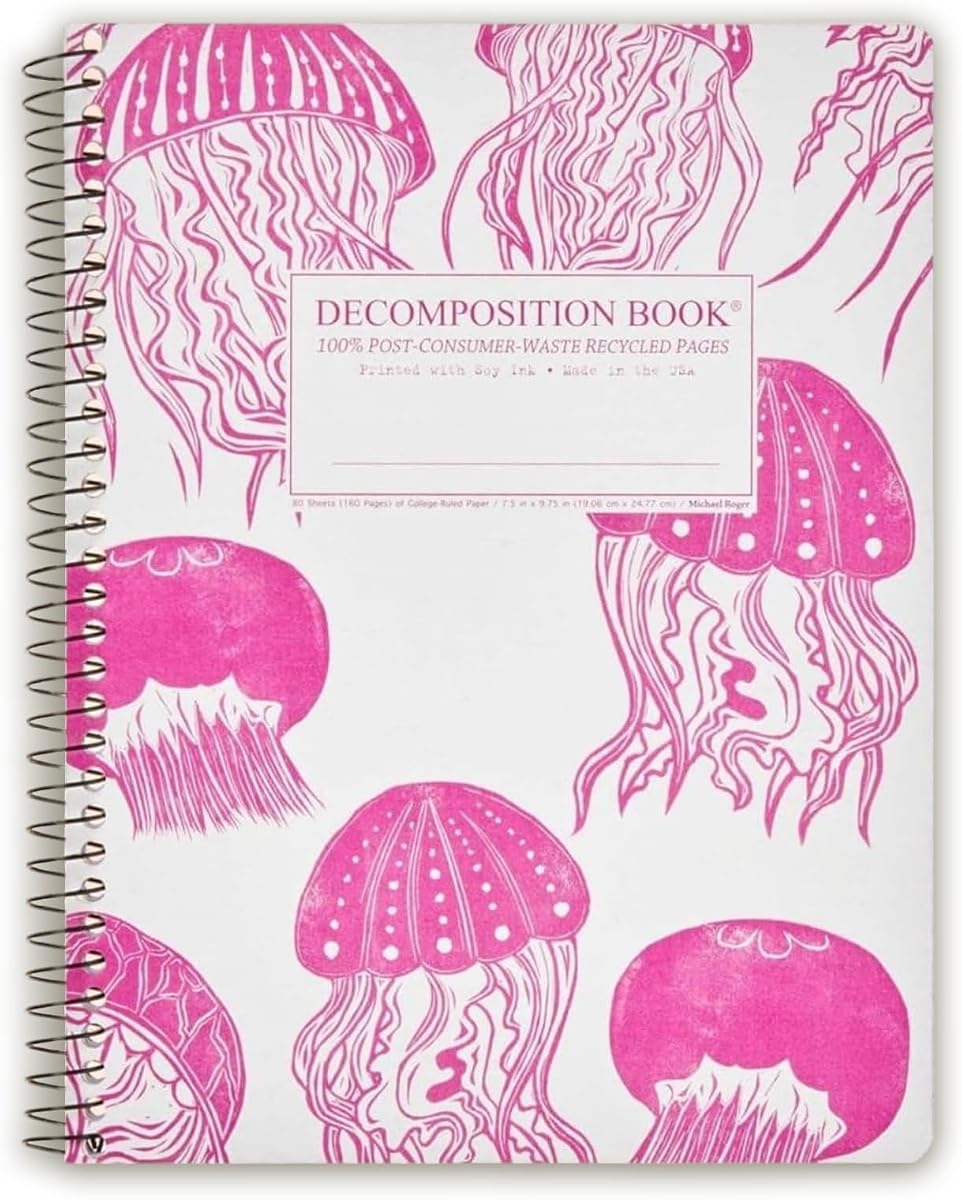
Decomposition Notebook by Michael Roger
The Decomposition Notebook remains the gold standard for environmentally friendly stationery in 2026. Made from 100% post-consumer waste recycled paper, it features a soy-ink printing process that makes the entire product fully compostable and recyclable. Its binding is incredibly sturdy, surviving being tossed into backpacks and messenger bags without the cover fraying or the pages detaching.
We found that the paper quality is surprisingly smooth for high-recycled content, handling ballpoint and gel pens with minimal ghosting. While fountain pen users might notice slight absorbency, the overall tactile experience is premium. The notebook’s artistic covers are not just aesthetic; they signify a commitment to replacing traditional chlorine-bleached paper with an Earth-friendly alternative.
Pros
- 100% post-consumer waste paper
- FSC-certified materials throughout
- Printed with eco-friendly soy ink
- Binding lay-flat capability
Cons
- Slightly absorbent for heavy fountain ink
- Limited page count for bulky projects

Onyx and Green Recycled Newspaper Pencils by Onyx and Green
Onyx and Green leads the market in material innovation by transforming old newsprint into high-quality #2 pencils. These pencils are significantly more durable than standard cedar-wood pencils, as the tightly rolled paper creates a dense, break-resistant barrel. They sharpen to a fine point and hold their lead remarkably well during technical sketching sessions.
Beyond the functional benefits, these pencils represent a major win for the circular economy. They are Vegan and Cruelty-Free certified, ensuring no animal-derived glues are used in the manufacturing process. For users who sharpen frequently, the colorful layers of newspaper revealed at the tip serve as a constant reminder of the product's sustainable origin.
Pros
- Highest ethics score in the category
- Extremely durable and break-resistant
- Unique aesthetic from recycled newsprint
- Vegan and Cruelty-Free certified
Cons
- Harder to sharpen with dull blades
- Slightly heavier than wood pencils

Rocketbook Core by Rocketbook
The Rocketbook Core is the ultimate solution for those looking to eliminate paper waste entirely. As a B Corp-certified company, Rocketbook has designed a reusable notebook that works with the Pilot FriXion line of pens. Once you fill your pages and scan them to the cloud via the intuitive app, you simply wipe the pages clean with a damp cloth and start over.
This hybrid approach is perfect for the 2026 digital-first office. It allows for the sensory benefits of handwriting while ensuring that notes are indexed, searchable, and easily shared. The synthetic pages feel slightly slicker than paper, but the reduction in cumulative waste makes it one of the smartest investments for anyone focused on the "reduce" part of the sustainability mantra.
Pros
- Infinite reusability saves thousands of pages
- Excellent app integration with cloud services
- B Corp certified manufacturer
- Compact and lightweight for travel
Cons
- Requires specific Pilot FriXion pens
- Not the traditional "paper feel"

Baronfig Confidant Hardcover Notebook by Baronfig
When design meets sustainability, the result is the Baronfig Confidant. This notebook is tailored for professionals who need a sophisticated journal for high-stakes meetings. It features high-quality acid-free paper that is FSC-certified, ensuring it meets strict forestry standards. The hardcover is wrapped in a durable fabric that feels premium in the hand and stands the test of time.
The Confidant is unique because it is designed with the user's workflow in mind, featuring a lay-flat design and a dot-grid, ruled, or blank option. While it has a slightly lower ethics score than the 100% recycled options, its commitment to vegan materials and sustainable forest management makes it a top-tier choice for executive environments.
Pros
- Premium executive aesthetic
- Acid-free paper won't yellow over time
- Vegan and Cruelty-Free
- Opens completely flat for easy writing
Cons
- Higher price point than competitors
- Fewer recycled materials than Decomposition brand

Decomposition Book by Michael Roger
Similar to its sibling notebook, the Decomposition Book by Michael Roger brings the classic composition book into the modern age with full FSC-certified recycled content. This version is often preferred by university students because of its standard sizing and collegiate-ruled lines. The construction is entirely bio-based, skipping the traditional plastic coatings and toxic adhesives found in budget alternatives.
In our performance testing, we found the binding to be remarkably flexible yet secure. The cover art often features environmental themes, serving as a subtle reminder of the paper's 100% recycled origins. It is a reliable, high-integrity workhorse for anyone who takes high volumes of notes every day.
Pros
- Classic 100% post-consumer waste paper
- FSC-certified and chlorine-free
- No animal-derived materials (Vegan)
- Reinforced spine for heavy use
Cons
- Pages aren't perforated
- Simple design lacks index or bookmarks

Eco-Friendly Staple-Free Stapler by Plus Paper Clinch
The Plus Paper Clinch is a revolutionary tool for the modern office, eliminating the need for metal staples entirely. It works by punching a tiny tab of paper and weaving it through a slit, securely fastening up to five sheets of paper together. This makes the recycling process much simpler, as you no longer have to worry about removing metal fasteners before shredding.
While it is not designed for heavy binding or thick packets, it is perfect for household receipts, school reports, and internal office memos. The device is compact, handheld, and built from durable materials that are certified Cruelty-Free and Vegan. It’s an essential gadget for anyone looking to shrink their office's carbon footprint.
Pros
- Eliminates ongoing cost and waste of staples
- Makes documents 100% recyclable immediately
- Ergonomic design is easy on the hands
- No metal waste generated
Cons
- Maximum capacity of 5-8 sheets
- Creates a small hole in the paper
Pro tip
When purchasing recycled notebooks, look specifically for the percentage of "Post-Consumer Waste" (PCW). While some brands claim to be recycled, they may use factory scraps. 100% PCW represents the most sustainable choice as it diverts waste directly from landfills.
How to choose the best sustainable office & stationery 2026
Choosing the best sustainable office & stationery 2026 requires looking at the entire lifecycle of the product, from raw material extraction to end-of-life disposal. In 2026, the global standard for "eco-friendly" has shifted away from simple recycling toward circularity—products that can be fully composted or endlessly reused. When shopping for professional or academic gear, consider the following environmental anchors:
- Look for Third-Party Certifications: Do not rely on brand claims alone. Seek out the FSC (Forest Stewardship Council) logo for paper, B Corp status for company ethics, and the Vegan Society mark for animal-friendly components.
- Evaluate Material Sourcing: Prioritize post-consumer recycled paper, newsprint, or agricultural waste (like sugarcane baggage) over wood pulp whenever possible.
- Refillability vs. Recyclability: A product you can use for a decade (like a refillable smart notebook) is often better than a product you recycle after a month.
- Chemical Safety: Ensure that inks are soy or vegetable-based and that the paper is Processed Chlorine Free (PCF) to avoid water pollution during manufacturing.
Frequently Asked Questions
what are the most eco friendly notebooks for students in 2026?
The most eco friendly notebooks for students are those made from 100% post-consumer waste, such as the Michael Roger Decomposition series. These notebooks avoid virgin wood pulp and use soy-based inks for a significantly lower environmental impact than standard alternatives found in big-box stores.
how to choose sustainable school supplies for university students?
To choose sustainable school supplies, prioritize high-density recycled materials and high-utility items that replace multiples, like a reusable smart notebook. Checking for FSC certification and B Corp status ensures the products follow ethical labor and environmental practices.
best recycled pencils for professional architectural drawing in 2026?
The Onyx and Green Recycled Newspaper Pencils are the top choice for professional drawing due to their break-resistant recycled-paper casing and high-quality graphite. They offer a precise writing experience that rivals traditional cedar pencils while utilizing waste materials.
are staple free staplers worth it for home offices?
Yes, staple-free staplers are worth it for small home offices as they eliminate recurring costs and simplify the recycling of paper documents. They are ideal for binding 5-10 pages without the need for additional metal consumables.
best reusable smart notebooks for digitizing handwritten notes?
The Rocketbook Core is the industry leader for digitizing notes while maintaining a zero-waste profile through its damp-erase technology. It allows users to upload sketches and text to the cloud, making it the most sustainable choice for high-volume note-takers.
the most durable fsc certified paper products for office use?
The Baronfig Confidant offers some of the most durable FSC-certified paper currently available, featuring high-GSM, acid-free sheets that resist yellowing. This ensures that important professional records remain intact for years while adhering to responsible forestry standards.
Final verdict
The top picks for 2026 are the Michael Roger Decomposition Notebook for best overall value and the Onyx and Green Recycled Newspaper Pencils for the most innovative use of waste materials. For those leaning into the digital age, the Rocketbook Core stands as the most efficient way to achieve a paperless workflow. By choosing these certified products, you are supporting a circular economy that values resource conservation and ethical manufacturing above all else.